Case Study — Product Design
2018 to 2021
I helped Dyno Nobel build Nobel Fire, a tool that lets blast engineers design, simulate, and document blast patterns digitally instead of on paper. I traveled to Perth to work directly with blast engineers, mapping their existing process and prototyping a system that keeps every site's plan compliant, repeatable, and easy to hand off across global teams in Bosnia, Australia, and the US.
$5M+
ADDITIONAL MONTHLY REVENUE
~5x
ROI FOR NOBEL FIRE MINES
18%
INTERNAL COST SAVINGS
The Problem
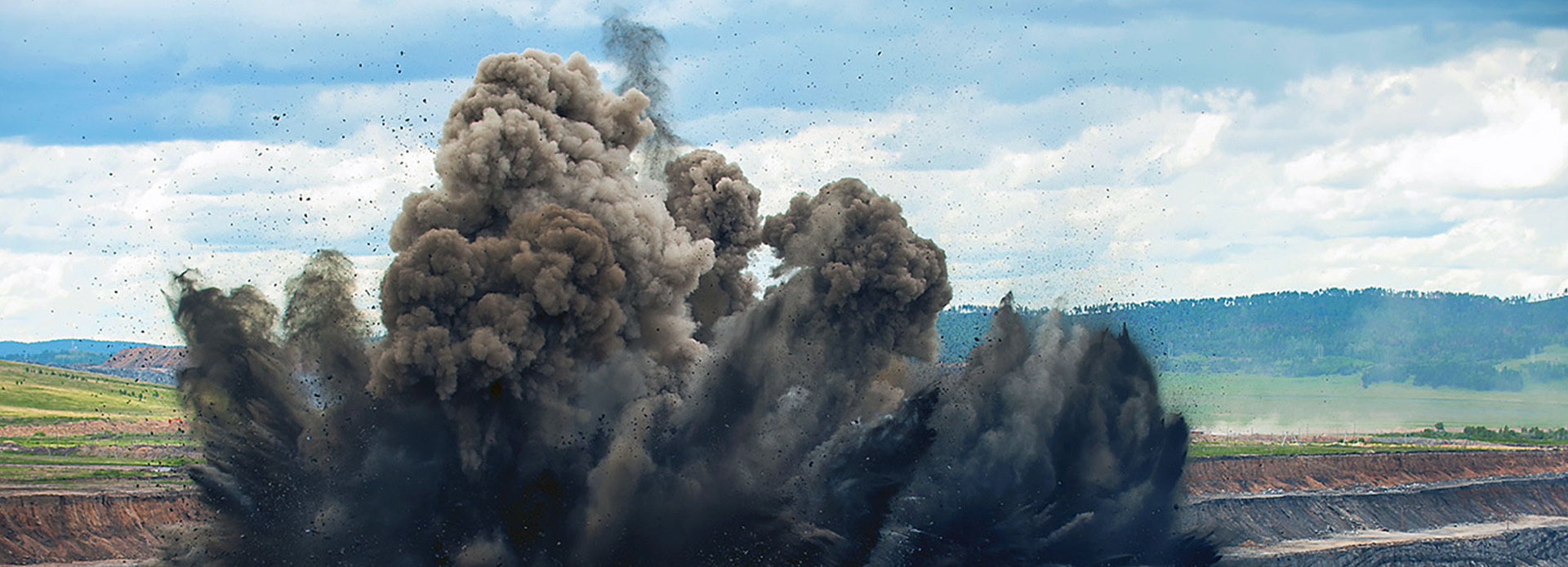
An Australian mining operation we worked with was losing roughly $1M an hour every time oversized material jammed the crusher and shut down production. When we traced the root cause, it wasn't the crusher at all — it was decisions made much earlier, back in the drilling and loading phase, where blast plans were still designed on paper with no way to predict how the rock would actually fragment.
That gap between planning and outcome was the real opportunity: the operation already had the data needed to simulate a blast before it happened. Nobody had built the tool to use it.
The Solution
Nobel Fire turns a mine's own operational data into a digital simulation of the blast before a single hole is drilled — mobile and web tools, built to work on and offline, that optimize fragment sizing and mining efficiency instead of just documenting a plan after the fact.
The How
I worked directly with experienced mining professionals in the US and Australia to shape the product, then designed and directed an offshore development team to build it — blast optimization for predictable fragment sizing, data-driven forecasting, mine planning, automated compliance documentation for both US and Australian regulators, and faster planning workflows so a smaller team could take on more sites. Everything had to run on desktop and tablet in extreme field conditions, not just in an office.
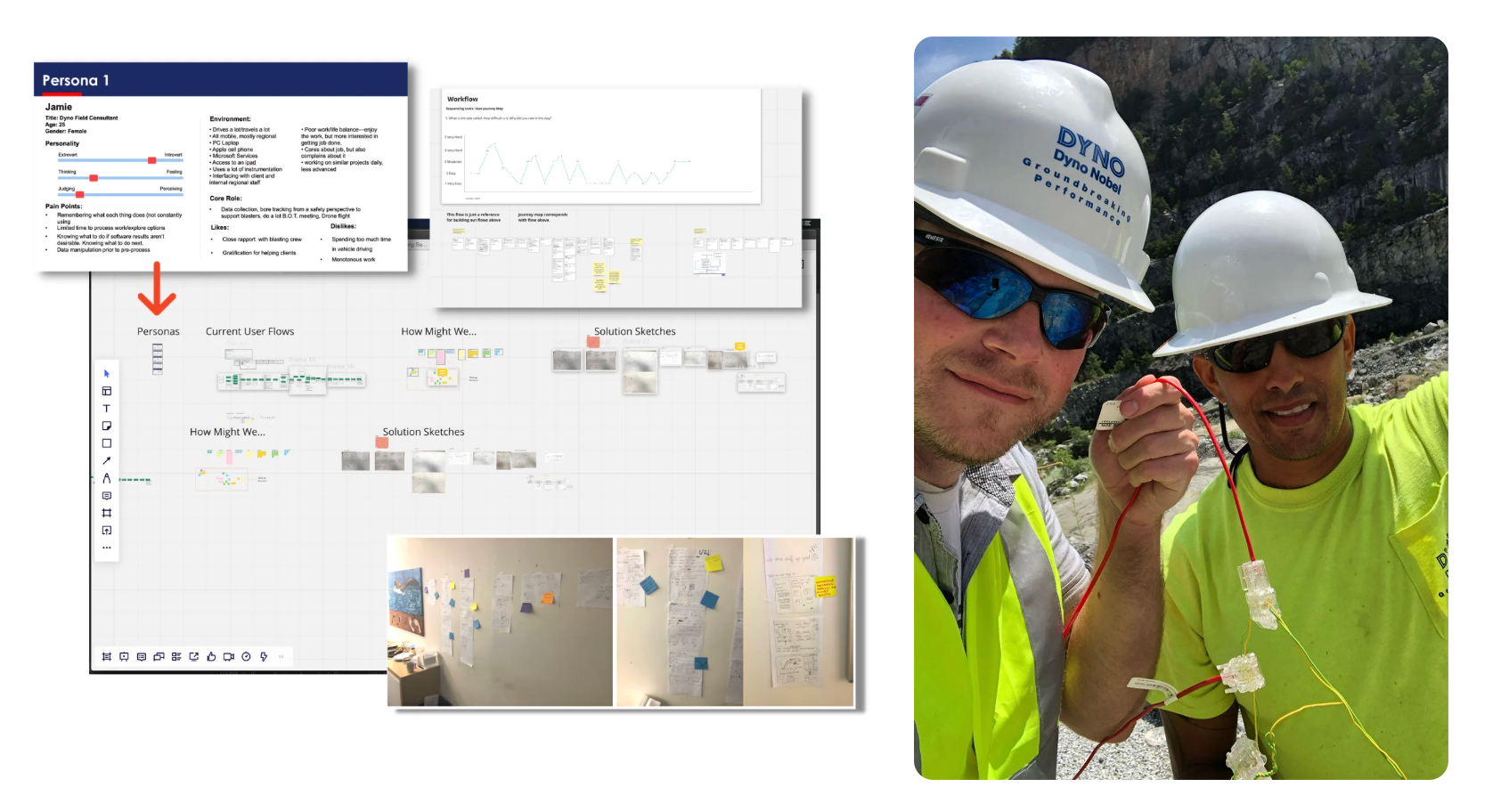
Understanding the problem meant getting out to the sites themselves — seeing how blast engineers actually worked with drilling and loading crews, not just how the process looked on paper.
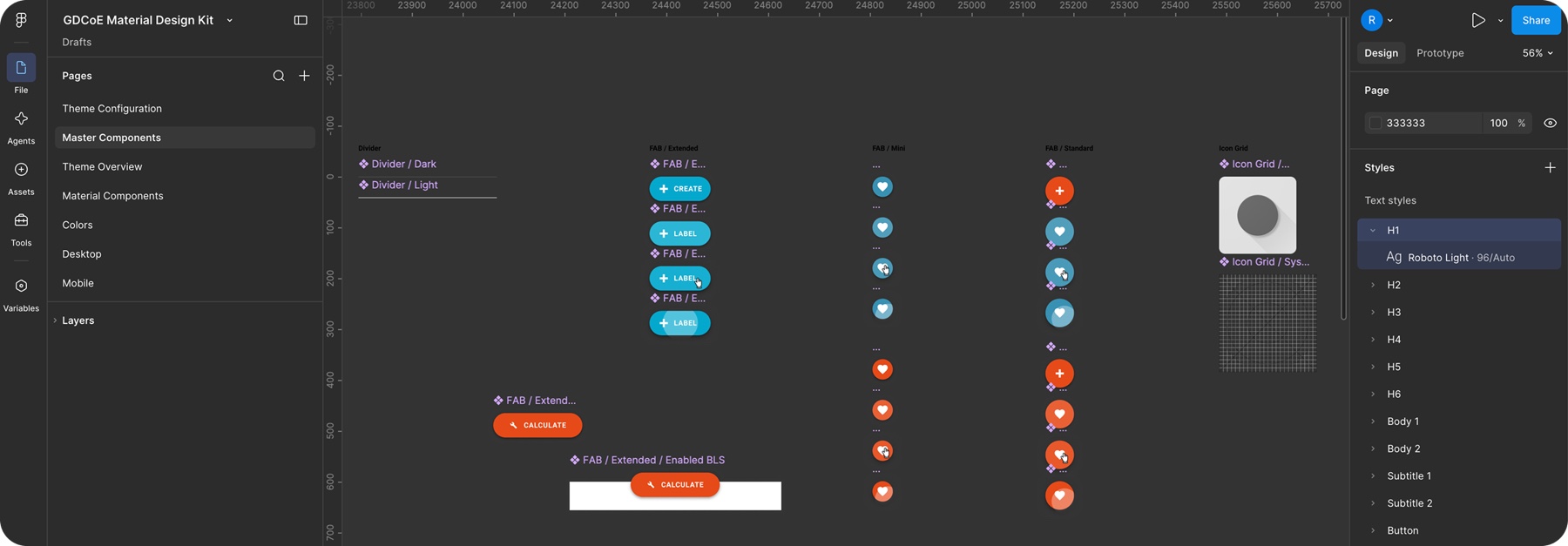
Next, I got to work on building a robust design system founded on Material Design principles. I had just transitioned from using Sketch App to Figma and quickly got comfortable with its toolset.
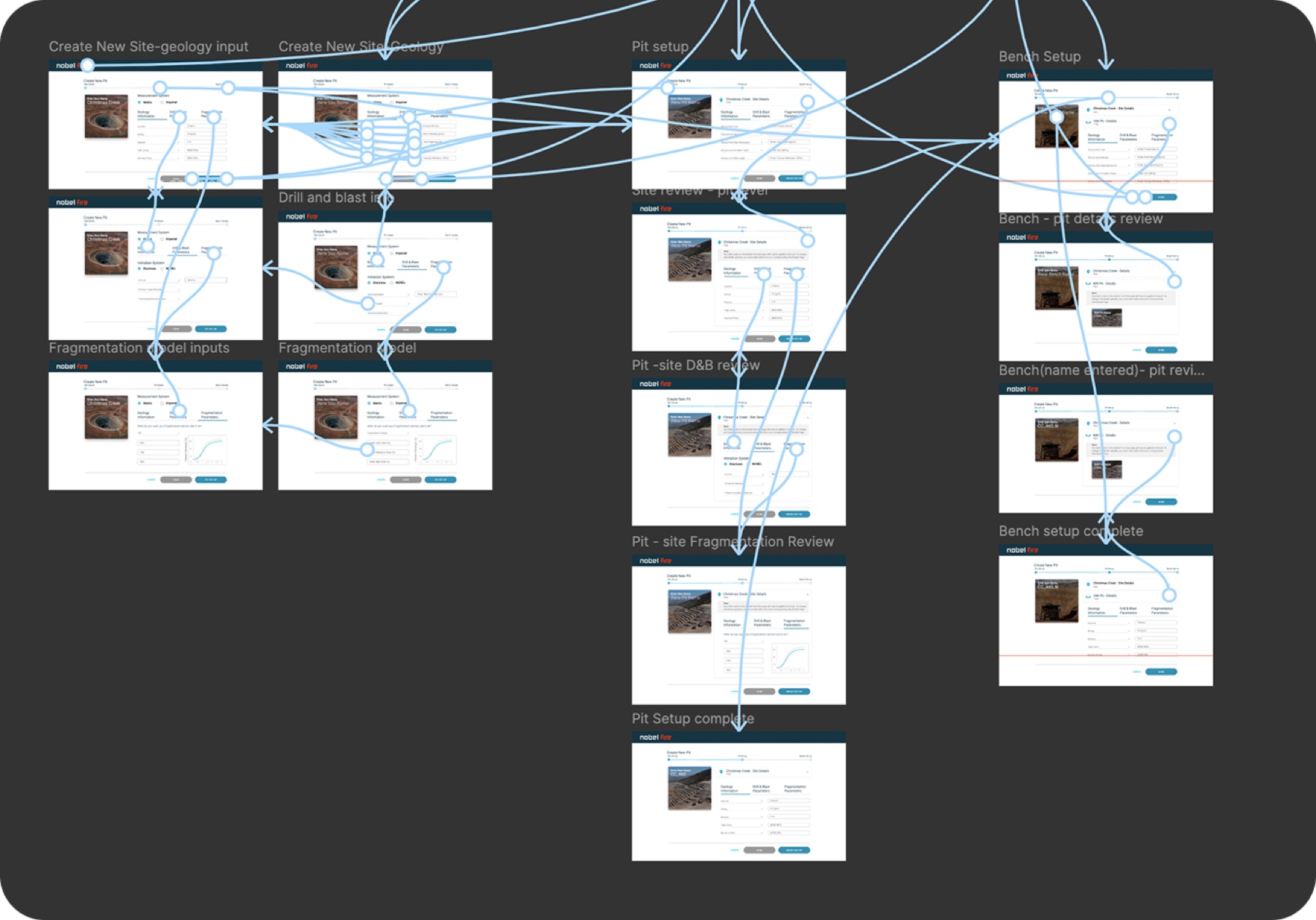
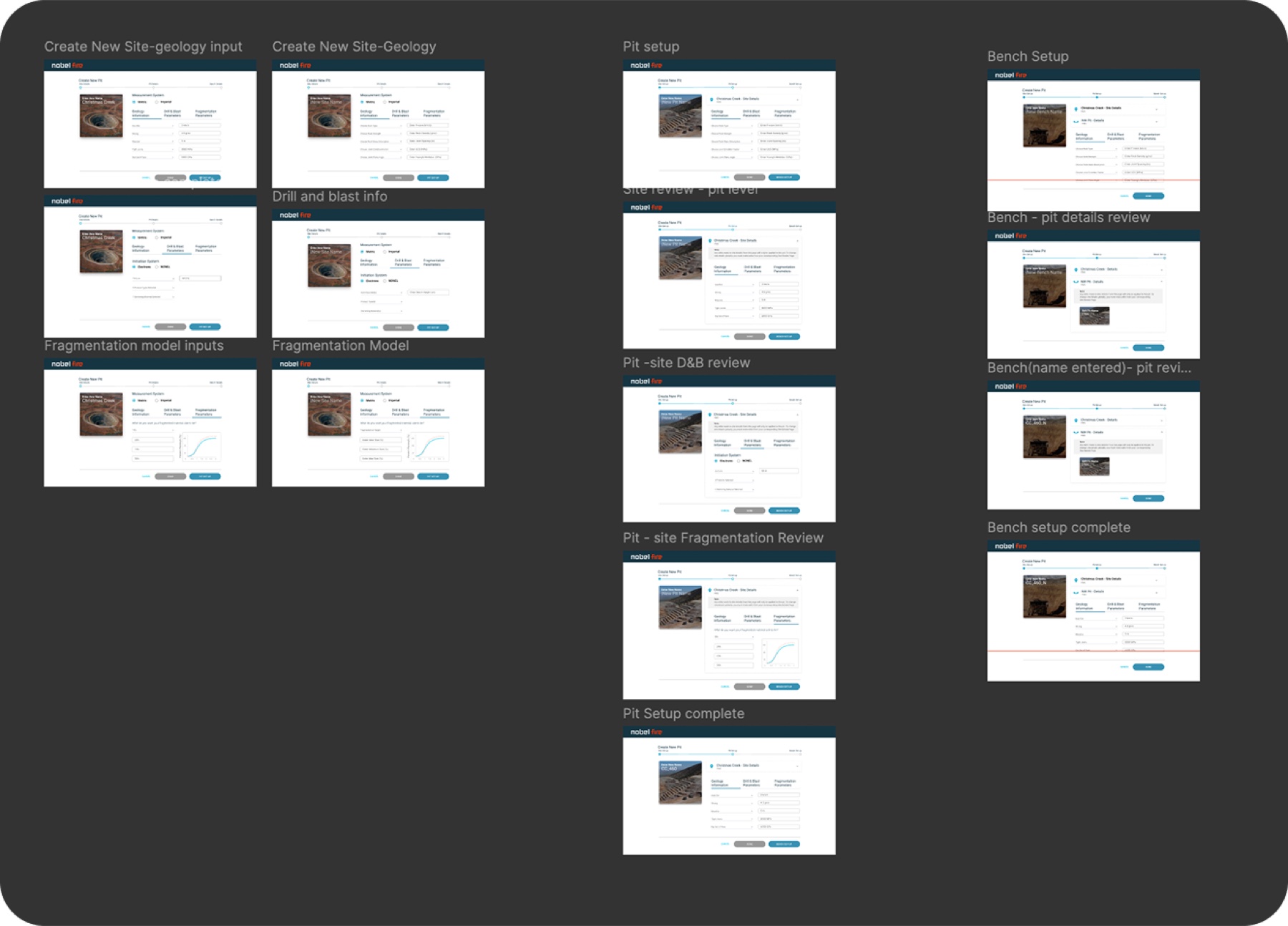
From long-term planning through drilling, loading, and detonation, every stage needed to feed the next with the right data — and produce a digitally verified record at the end instead of a paper trail.
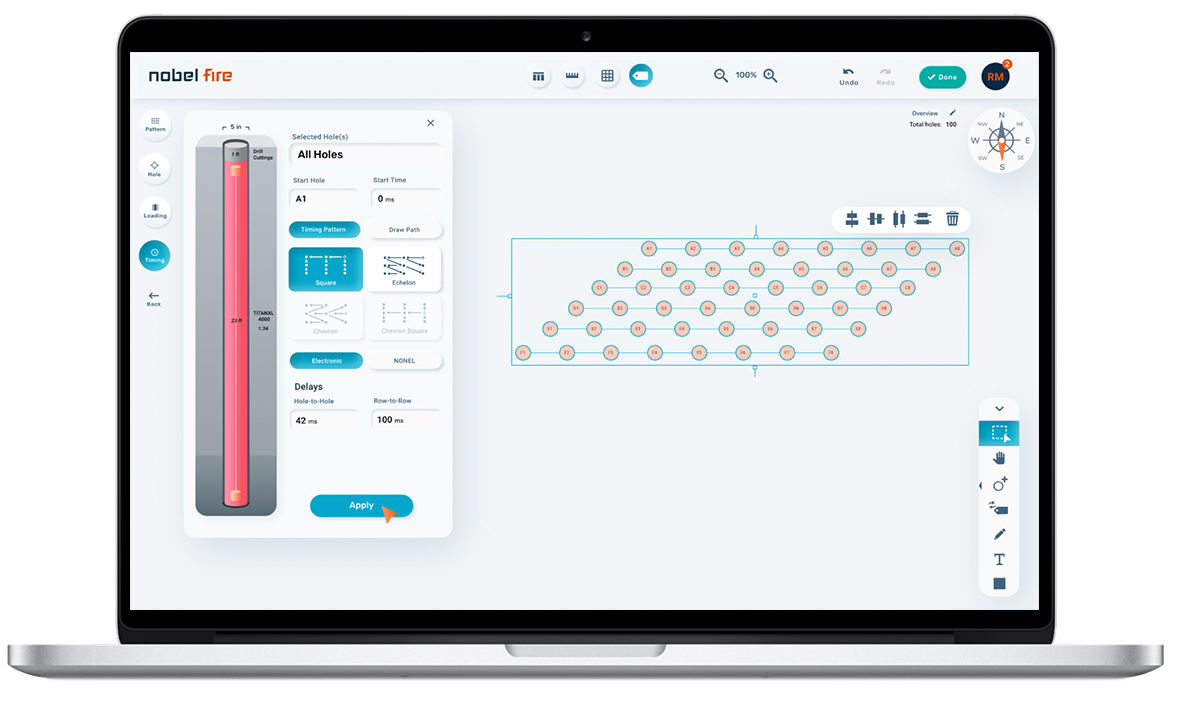
The core of the tool is the blast pattern editor, and getting its timing display right took real iteration. My first pass put timing in a couple of columns next to each hole — accurate, but it ate up too much white space once a real pattern had dozens of holes on it. The fix came from an unlikely place: watch faces. Surrounding each hole with its own ring of numbers — depth and detonation timing, readable at a glance — kept dense patterns legible instead of cluttered.
A large share of the user base are veteran blasters working outdoors, often in bright sun, with vision that isn’t what it used to be. I used WCAG contrast guidelines as a baseline, then went further — testing the designs outside in direct sunlight while wearing tinted safety glasses, the same gear blasters wear on site, to see the screen the way they would. That test-in-context approach is what got the pattern editor to a design that held up in the field, not just on a monitor indoors.
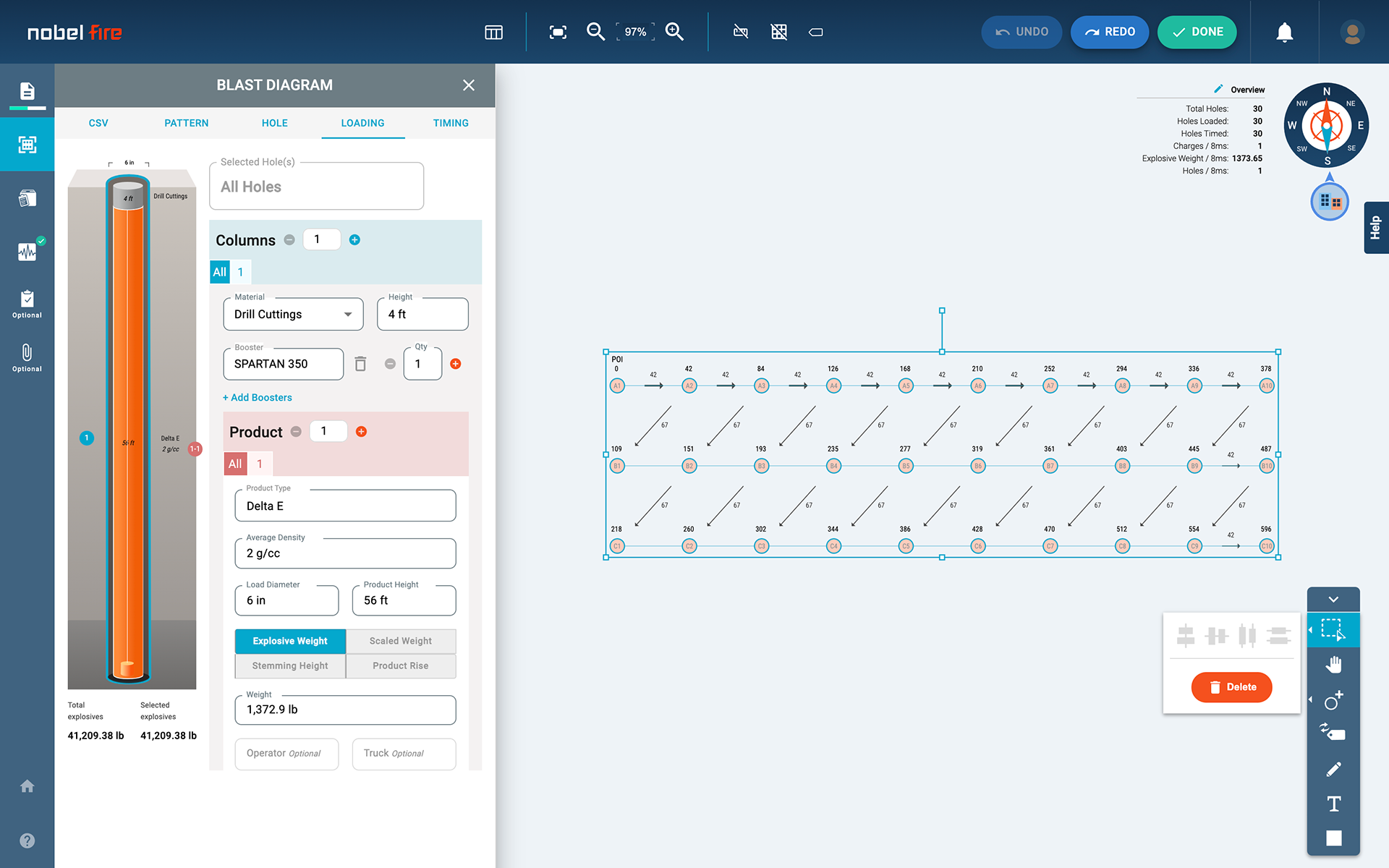
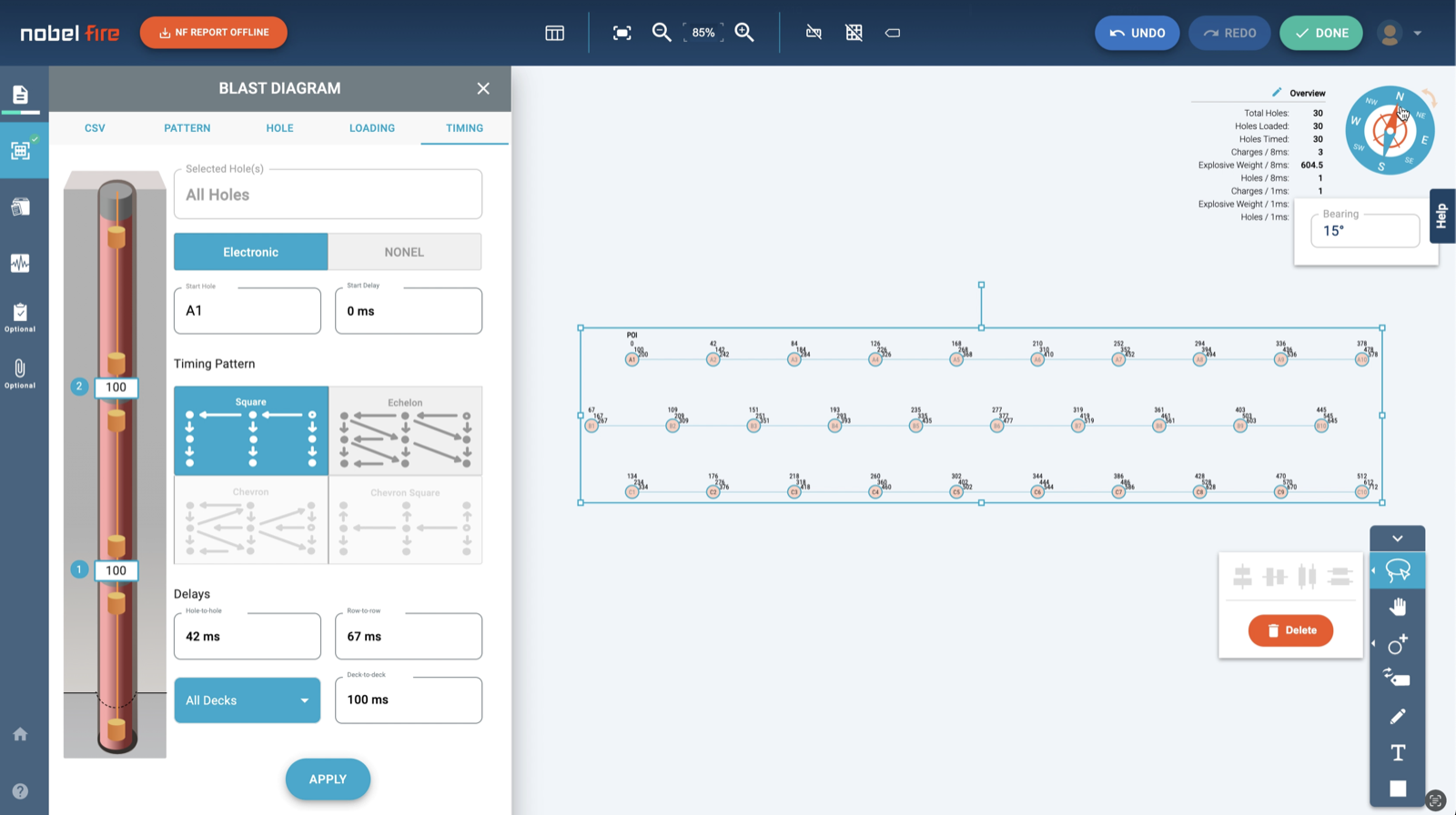
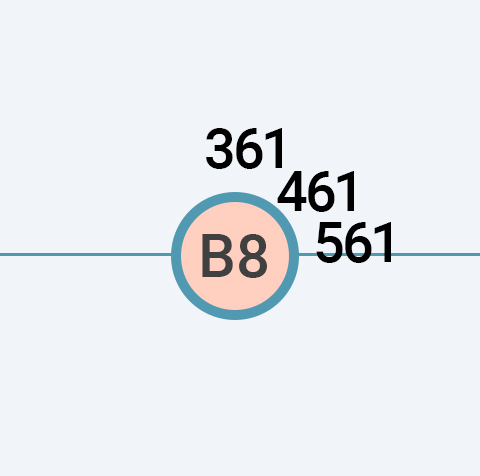
A single hole can run 200+ ft deep and hold multiple charges at different depths, or “decks” — most holes carry 2–3, some as many as 12. Each deck gets its own timing interval, shown stacked here (B8: 361, 461, 561ms), so the display had to stay readable with up to four digits per line.
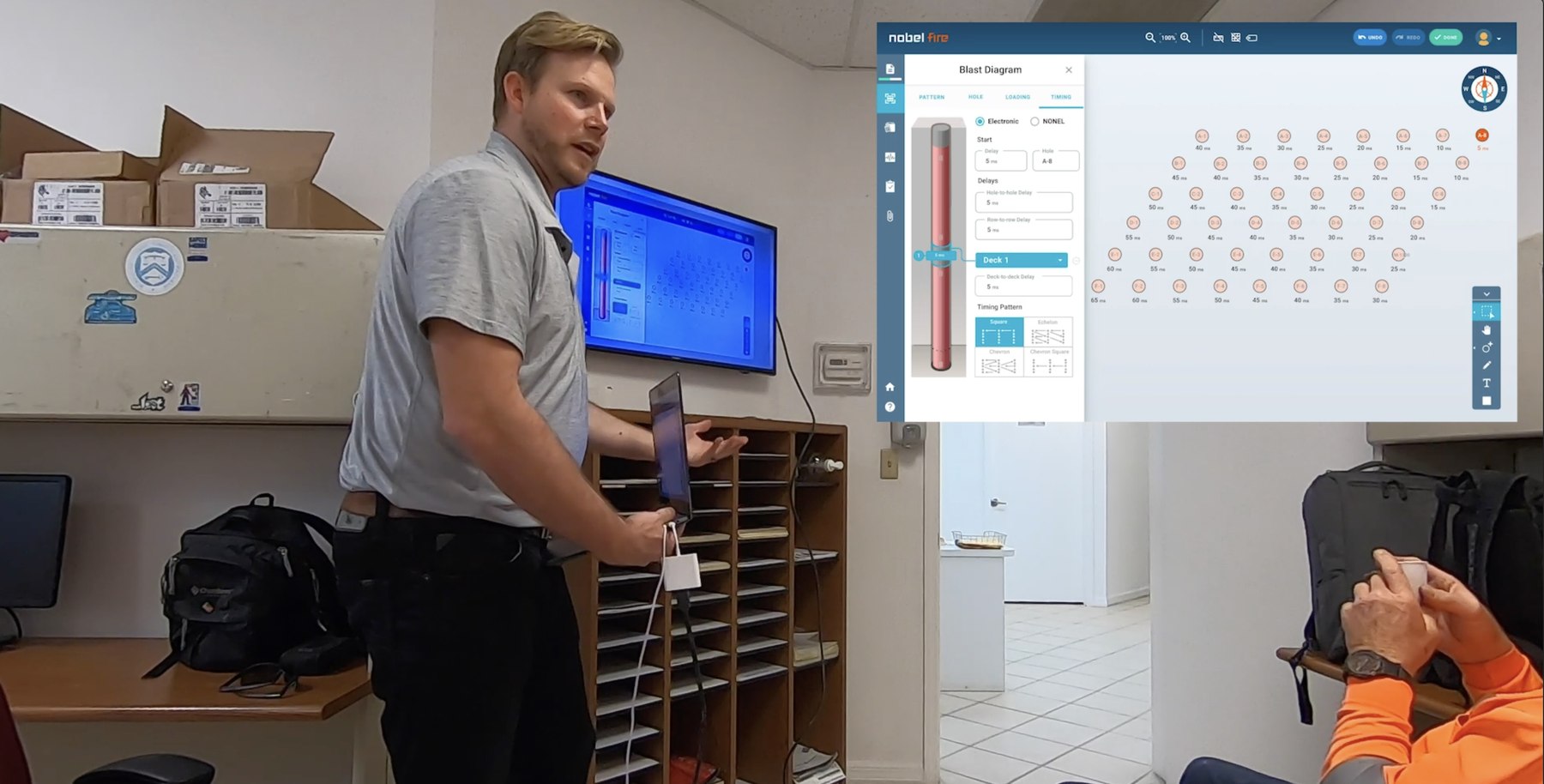
Presenting a more finished version of Nobel Fire on site in Miami, walking blasters through the timing and pattern tools directly.
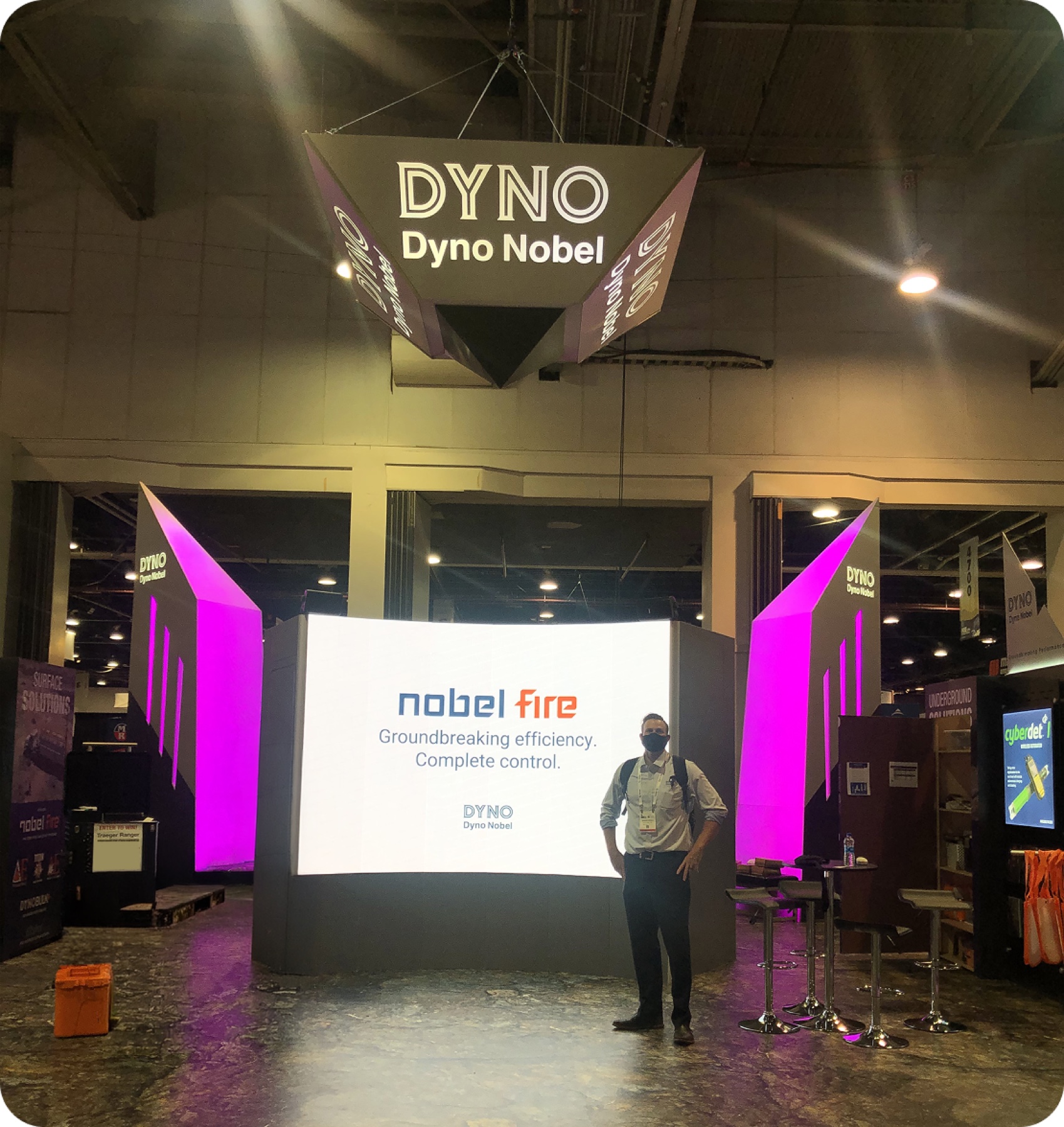
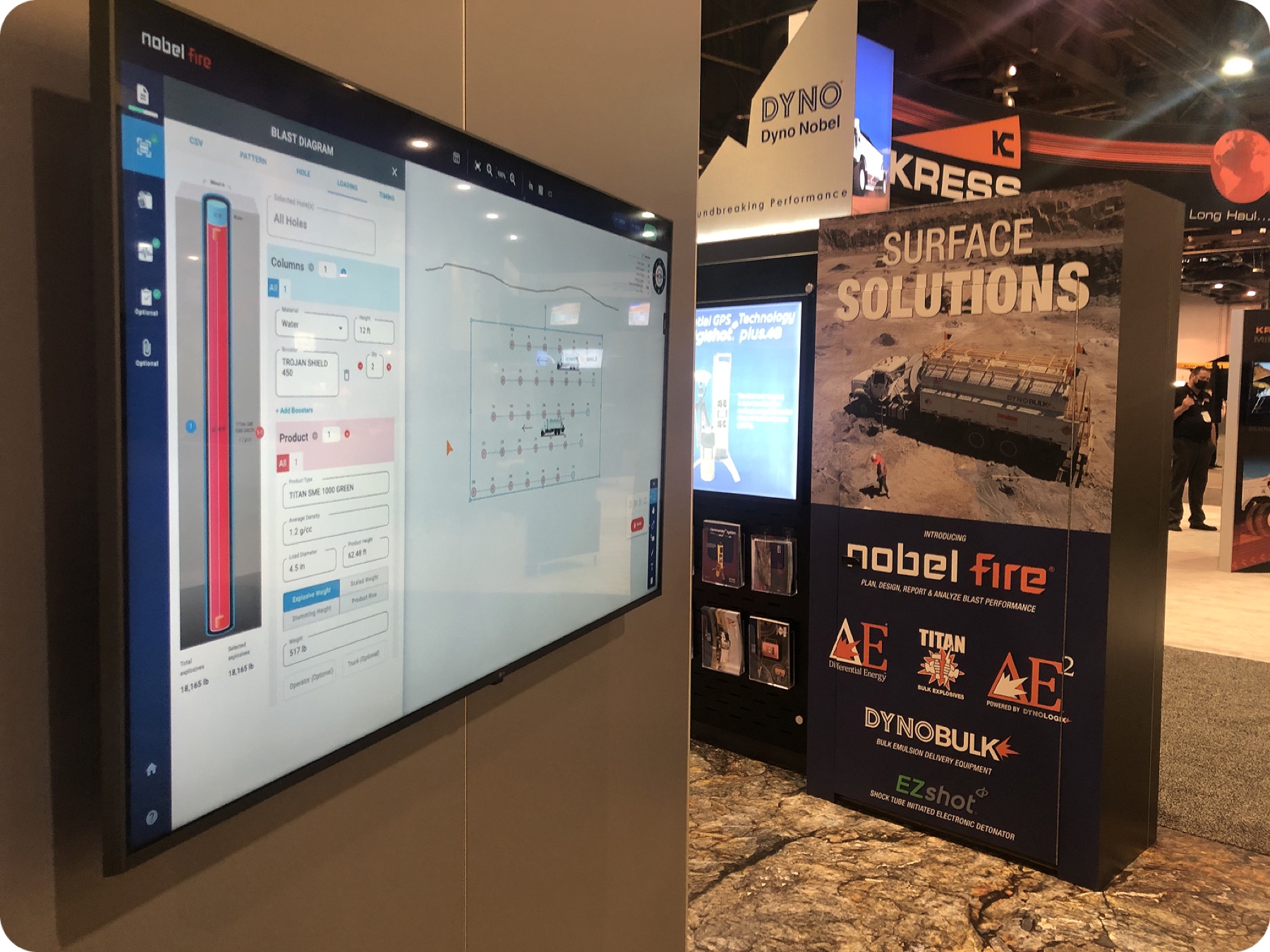
Mine Expo, Las Vegas, NV
Solving legibility at the hole level was one piece. The bigger goal traced straight back to the crusher problem: predicting how rock would actually fragment before a single hole was drilled. I worked with a computational physicist who’d built a proprietary fragmentation model, and we wove his predictions directly into blast planning, so a blaster laying out a pattern could see how it was likely to break the rock before committing to it.
Blasters tested the model against ore — a notoriously difficult material to fragment predictably — at a mine site and saw better breakage than their existing process produced. That mine’s crusher started running more smoothly as a direct result.
Outcome
Cutting costs across labor and production downtime, reducing material waste with a real environmental benefit, and giving adopting sites a competitive edge all drove strong uptake — validated directly at the test site where the fragmentation model shipped: better breakage on the blast floor, smoother crusher runs downstream of it.
The lesson that held across the whole project: solve the smallest unit of the design first. A blast pattern’s timing had to be legible hole by hole before any of it could scale up to a mine’s crusher efficiency — and it did.
What are others saying about Richard Kimball?

Jasmina Karahan
Program Manager
It was always a real pleasure working with Richard. He is an extremely talented designer, but what sets him apart are his great communication skills and understanding of business and users. As a frontend engineer I had a great experience working with Richard and I truly believe he would be a great asset to every team.
Mar 3, 2022

Anida Mumic
Senior Client Partner
Over the period of 1.5 yrs I have worked with Richard on building a unique product. I am proud to say that I have learned so much about his role and how having a brilliant designer, who is also a team player, can make a huge impact on delivery. Richard was always on top of communication between the development and product team, always seeking simple and effective solutions and working closely with everyone to overcome impediments. On top of this, he always brought a positive spirit and made our work a true joy. With his skills and attitude, any team will be lucky to have him.
Oct 19, 2021

Admir Pehratović
Solution Architect | Head of Software Engineering
Richard is a truly amazing person to work with, always with a positive attitude. He is a hardworking person who pays a lot of attention to details. He has a great sense of the product and was the bridge between PO and technical teams. Great asset for every team.
Oct 18, 2021

Anis Zuko
Software Engineer
I'm glad I had a chance to work with Richard (also known as Figma Guru), and as a frontend engineer, learn new design skills from him. He's a hard and passionate worker. He pays attention to details and is an amazing person for collaboration and always ready to hear new ideas. Great asset to every team, for sure. I highly recommend Richard for future projects.
Jun 18, 2021
View More Work

 LinkedIn